

DP2BRICKS
ModernizeĀ DataprocĀ at Scale Automatically, Reliably, End-to-End
Dataproc to Databricks
A migration accelerator that streamlines the shift from Dataproc's cluster-heavy architecture to Databricks' unified compute model for a predictable, governed modernization workflow.
Why migrate from
Dataproc to Databricks?Ā
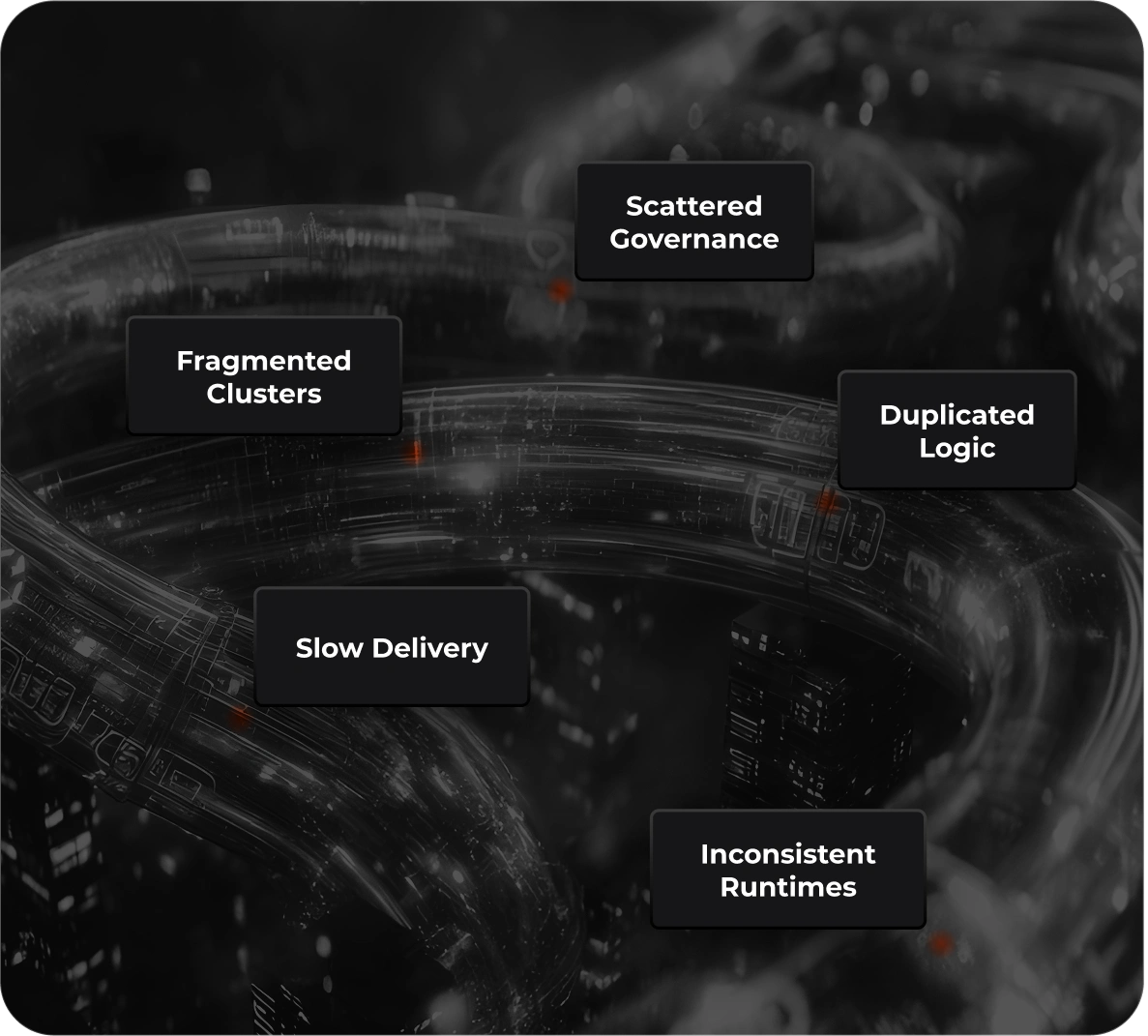
DataprocĀ handles small pipelines well, but growing workloads lead to fragmented clusters, duplicated logic, and inconsistent runtimes. Manual dependency management slows delivery, rising volumes increase costs, and governance stays scattered.
DatabricksĀ solvesĀ this with unifiedĀ computeĀ and Delta-native governance, but reaching it requires a structured, automated migration pathway.Ā
DP2BRICKS provides exactly that: a governed, automated modernization engine for Dataproc workloads.
Customer Challenges Addressed by DP2BRICKS
Fragmented clusters lead to limited cross-team visibility.
High operational overhead and pipeline maintenance.

Manual logic causes metric drift, slow reporting, and unreliable analytics.
Lack of unified governance and lineage makes scaling difficult.

Unable to estimate migration effort, cost, or timelines, blocking modernization planning.
Core Capabilities
Spark Conversion & Optimization Engine
Transforms Dataproc Spark/Hive workloads into Databricks-ready formats, including Spark SQL rewrites, config normalization, Delta Lake adoption, and optimized cluster/job definitions.
Workload Classification & Dependency Mapping
Maps dependencies across jobs, libraries, JARs, UDFs, Airflow/DataprocĀ Workflow templates, and cluster configs, highlighting incompatibilities and grouping workloadsĀ for stagedĀ migration.Ā
AI-Powered IntelligenceĀ
AI-driven insights to detect Spark anti-patterns, recommend efficient Databricks alternatives (Photon, Delta Lake, Auto-Optimize), and automatically fix common migration blockers.
Performance Monitoring & Alerts
Near real-time visibility into migration readiness with automated detection of performance bottlenecks, deprecated APIs, non-portable configurations, and required optimizations.Ā
Data Governance
& Security
Unity CatalogĀ ensuresĀ secure and compliant handling of notebooks, SQL logic, libraries, job configurations, and lineage during migration.Ā
Data Ingestion & Standardization
Ingestion ofĀ DataprocĀ Spark jobs, PySpark notebooks, Hive SQL scripts, and workflow metadata into a normalized structure for automated analysis and migration planning.Ā
Technical Capabilities
Hybrid Parsing &
Translation Engine
Combination of AST parsing, rule-based rewrites, and targeted LLM reasoning for precise BigQuery ā Databricks conversion.Ā
LLM + RAG
Self-Healing LayerĀ
Capture runtime errors, retrieval of relevant fixes, and intelligent auto-correction that improves accuracy over time.Ā
Schema Generation &
Validation Framework
Auto-creation of schemas and tables, translated query execution on Databricks, and output validation.Ā
Why Syren + Databricks?
A Unified, Reliable Spark RuntimeĀ
Move from fragmentedĀ DataprocĀ clusters to a fully managed, autoscaling Databricks environment.
Accelerated Migration with Intelligent RefactoringĀ
AI-assisted code translation and pattern detection streamline Spark, Hadoop,Ā &Ā PySparkĀ modernization.
Lower Operational Overhead
Automated dependency mapping, job inventorying, and pipeline standardization.
Confidence Through Test-Driven Validation
Side-by-side output comparisons using Delta Lake ensure every migrated job behaves consistently before production rollout.
Governed, Secure Scaling
Unity Catalog delivers unified governanceĀ (lineage, access control, auditing),Ā enabling compliant, enterprise-wide scaling.
Faster Time-to-Value on Databricks
EliminateĀ migration complexity and operational blockers to help teams adopt Databricks capabilities faster.
Value Delivered by BQ2Bricks
Lower migration effort through automated Spark/Hadoop conversion to Databricks-ready code.
Faster runtimes by eliminating inefficient patterns and optimizing transformations.
Reduction in operational overhead by consolidating fragmented Dataproc pipelines.
Faster adoption of Databricks AI/ML/BI with ready-to-run, cluster-free workflows.
Shorter modernization timelines using reusable ingestion, translation, and validation modules.
Improved cost predictability by replacing always on Dataproc clusters with serverless autoscaling compute.
