Let's be honest about where most CPG commercial teams actually are right now. They're sitting on more data than ever. They've got trade spend commitments eating 20 cents of every revenue dollar. They've got retailer negotiations getting harder every cycle. And when the CFO asks which promotions are actually moving the needle, the answer is usually a spreadsheet that took two analysts a week to build and was already out of date by the time it landed in the inbox.
This is a symptom of a weak strategy, and revenue growth management is how you fix it.
What Is Revenue Growth Management?
Ask ten people in the industry what revenue growth management means, and you'll get ten different answers. Some will say pricing, some will say trade optimization, and some others will point to a software platform they just bought.
Here's the real definition: revenue growth management (RGM) is a commercial strategy that grows net revenue and profitability by getting four things right at the same time: pricing, promotions, product mix, and trade spend.
The biggest financial gains come when every commercial decision, from what you charge for a SKU to how you structure a retailer's deal, is made with a shared understanding of where the business actually makes money.
Companies that get this right consistently report 5-10% annual revenue growth by being smarter about the volume they already have.
Why Is Revenue Growth Management So Important for CPG Companies Right Now?
Revenue growth management in CPG matters more than any other sector, and the reasons are pretty specific to how this industry works.
Margins are already thin, and they're getting thinner. When input costs go up, logistics costs go up, and retailer compliance costs go up all at once; you don't have room to absorb it passively. You need a system for deciding where to take pricing, where to hold, and where to cut, and that system has to be grounded in data, not instinct.
Trade spend is out of control at most companies. The industry average is around 20% of net revenue going into trade promotions. The uncomfortable truth is that well over half of that spend doesn't generate positive ROI. It generates volume that would have happened anyway, or worse, it trains shoppers to wait for the deal. That's a structural profit leak that RGM is built to fix.
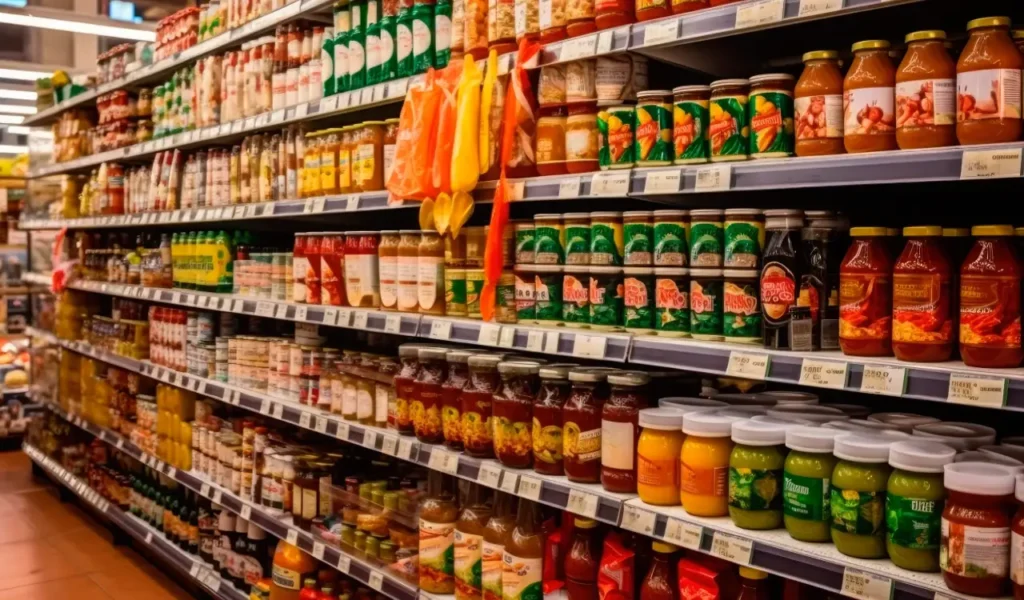
Private label isn't a fringe threat anymore. Premium store brands have gotten good. Really good. And they're sitting right next to your product on the shelf at a 15-20% lower price. You can't outspend that problem. You have to out-position it, which means knowing exactly which of your SKUs are exposed, what your real price gaps look like, and where brand equity actually drives a purchase decision.
Channel math has gotten genuinely complicated. A product sold through a club store, an e-commerce platform, and a convenience store each comes with different costs, different margins, and different shopper expectations. Revenue growth management CPG teams that don't account for channel-level profitability in their planning are making pricing and promotion decisions based on blended numbers that obscure more than they reveal.
The data exists. It just doesn't connect. POS data, shipment data, panel data, supply chain signals, and most large CPG organizations have all of it. The problem is that it lives in different systems, gets reconciled at different cadences, and never quite tells the same story. By the time you have a clean picture, the window to act on it has already closed.
What Are the Key Components of a Revenue Growth Management Strategy?
A lot of RGM initiatives get launched with a lot of ambition and end up as a new set of dashboards nobody has time to act on. The programs that generate real commercial returns are built around five specific things.
1. Pricing that reflects how your customers actually make decisions
Most CPG companies have a list price and a realized price, and a real gap between the two that nobody fully owns. Good pricing architecture means building a pack-price ladder that makes sense to shoppers, understanding what price points actually trigger a trade-down or drop-out by category, and having the analytical capacity to model the downstream effect of any price change before you make it. Not after.
2. Promotions that earn their budget
Every promotion should justify its place on the calendar. Not by generating volume, but by generating volume that wouldn't have happened otherwise. The difference between total lift and incremental lift is where most CPG brands are leaking margin and don't realize it. A good RGM gives your team the tools to see that difference clearly and design a promotional calendar around events that actually move the business.
3. Trade spend that gets managed like an investment
Trade spend is often treated like a fixed cost of doing business. It isn't. It's a capital allocation decision, and it should be evaluated the same way. Which accounts generate the best return on trade investment? Which event types actually build velocity versus just buying shelf space? Revenue growth management CPG teams that answer these questions systematically can reallocate millions of dollars toward higher-ROI activities without reducing total spend.
4. A mix strategy that improves margin without sacrificing volume
Not all revenue is worth the same. A dollar earned from a premium multi-pack is worth more than a dollar earned from a deep-discount feature. Mix management is deliberately shifting your revenue toward higher-value products, pack sizes, and channels over time. It also means having the discipline to rationalize SKUs that are consuming supply chain capacity without contributing meaningful profit.
5. Planning that connects commercial and supply chain decisions
This one is underrated. Pricing and promotion decisions have real supply chain consequences. A major promotional event that wasn't communicated to the supply chain team in time creates out-of-stock situations that wipe out the lift you were trying to generate. The best RGM programs are built on a planning process that keeps commercial and operations teams working from the same calendar and the same forecast.
Why Do Most CPG Revenue Growth Management Programs Fail to Deliver Results?
No revenue growth management strategy will work if your data is bad. And in CPG, data quality is a real problem because it comes from too many sources, gets processed at different times, and doesn't always agree with itself. A revenue management analyst who spends three days reconciling data before they can do any analysis isn't doing revenue management. They're doing data management.
A real RGM capability requires:
- A single, connected data environment where commercial, supply chain, and financial data can be interrogated together, in near real-time, without manual reconciliation
- Data you can trust at the point of decision, not data that has to be manually verified before anyone will act on it
- Analytical tools that work at scale, because modeling price elasticity across thousands of SKUs or decomposing promotional lift across hundreds of events is not a job for Excel
- Visibility that's built into the workflow, not a separate reporting exercise that happens after the fact
This is the infrastructure layer that most RGM strategies underinvest in. And it's usually why those strategies don't deliver what they promised.
How Do High-Performing CPG Companies Execute Revenue Growth Management?
The CPG organizations generating the best returns from revenue growth management tend to have a few things in common that are worth calling out.
They treat RGM as a continuous process, not an annual exercise. Pricing gets reviewed quarterly, at a minimum. Promotional ROI is measured at the individual event level. Trade spend gets rebalanced as performance data comes in, not just at the start of the planning year.
They've broken down the wall between commercial and supply chain planning. When pricing and promotion decisions are made with full visibility into inventory positions, capacity constraints, and replenishment lead times, the commercial plan is far more executable in practice.
They've built shared accountability across functions. Sales, Finance, Marketing, and Category Management are all working from the same data, toward the same commercial targets, with clear ownership of each piece. When those teams are misaligned, RGM breaks down at the point of execution, no matter how good the strategy looks on paper. And they've invested in a partner who actually knows CPG, not just analytics.
Where Syren Fits In
Syren is witnessing situations wherein RGM initiatives stall because the data infrastructure can't support them, and we've built our platform and service model specifically around fixing that.
Here's what we bring to the table:
- Common Data Platform and Data Observability: We connect commercial, supply chain, and financial data into one environment your teams can actually trust and act on. No more three-day reconciliation exercises before every planning meeting.
- AI-Powered Demand Planning and Supply Chain Visibility: Your pricing and promotion decisions need to be grounded in what your supply chain can actually deliver. We give commercial teams real-time visibility into the inputs that make-or-break execution.
- Syren’s Suggested Order Recommendation Engine: Most sales teams are still making outlet-level decisions based on experience and gut feel. Our Suggested Order Recommendation Engine changes that. It takes your historical sales data and turns it into specific, AI-driven recommendations for every single outlet in your network, what to sell, how much, and when. Sales agents stop guessing and start selling with a data-backed playbook behind every conversation.
- Advanced Analytics Built for CPG Scale: Elasticity modeling, promotional lift decomposition, trade ROI analysis, scenario planning. The analytical work that drives revenue growth management decisions is done at the speed and scale the business requires.
Our clients are making better commercial decisions, faster, with the confidence that the data behind those decisions is solid.
The Bottom Line for CPG Leaders
Revenue growth management in CPG has moved from a competitive differentiator to a basic requirement for running a profitable commercial operation. The companies that have built this capability are making smarter pricing decisions, running leaner trade programs, and holding margins under pressure that's crushing companies that haven't invested.
If you're ready to have a straight conversation about what it would take to build this in your organization, and what's been getting in the way, connect with our CPG solutions team.