Composer2Bricks
Modernize Apache Airflow Workloads to Databricks
Google Cloud Composer to DatabricksÂ
An accelerator that automates DAG conversion, dependency analysis, and environment deconstruction enabling enterprises to unify, govern, and scale with a Databricks-native approach.Â
Why migrate from Cloud Composer to Databricks?Â
Cloud Composer works well for isolated orchestration, but as DAG volumes grow, workflow drift, manual dependencies, and other factors slow delivery. Scaling becomes costly and unpredictable, with limited visibility and fragmented governance across teams.
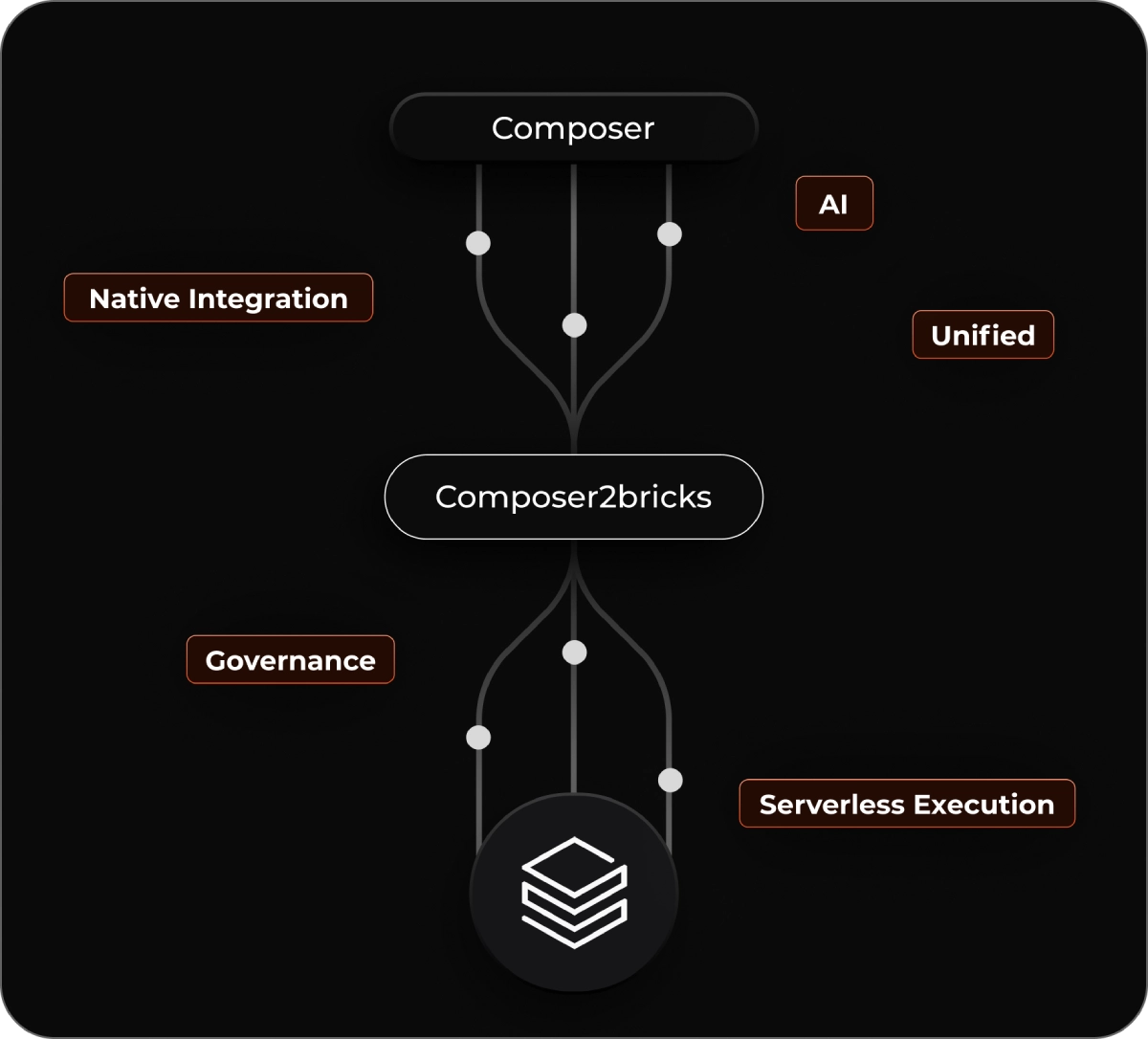
Databricks Workflows offers unified orchestration, serverless execution, and native integration with data, AI, and governance. Â
Migrating to Databricks requires a structured, automated migration pathway that Composer2Bricks provides.
Customer Challenges Addressed by Composer2Bricks
Fragmented environments cause DAG drift and duplicated orchestration logic.
Manual dependency, plugin,
and environment management increase overhead.

Airflow version drift creates
instability and slows releases.

Scaling workflows is expensive and unreliable as pipeline volumes grow.

Limited visibility, lineage,
and governance across orchestration assets
No clear way to assess migration effort, risk, or timeline
Core Capabilities
Standardized DAG Conversion
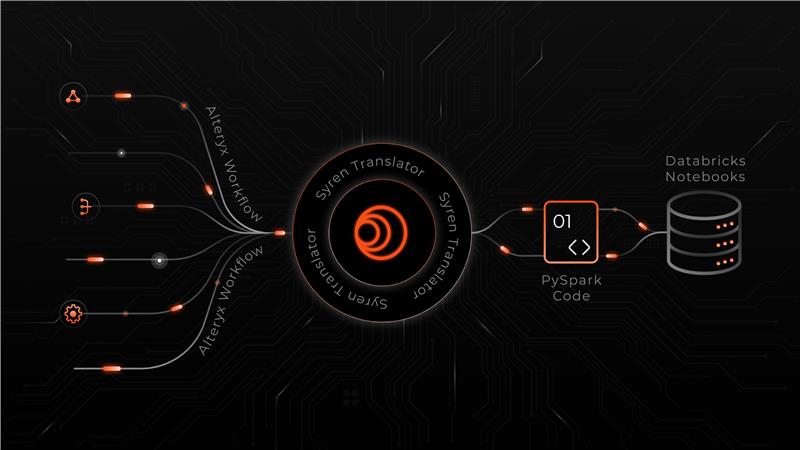
Automatically converts Airflow DAGs, operators, sensors, and task logic into Databricks Workflow equivalents using extensible translation rules.
Workflow Conversion Engine
Rule-driven mapping of scheduling, retries, dependencies, sensors, and environment configs into Databricks-native workflow constructs.
Non-Portable Pattern Detection
Identifies Composer-specific operators, custom plugins, deprecated APIs, GCP-bound services, and unsupported dependencies requiring remediation.
AI-Powered Refactoring Intelligence
AI-assisted pattern detection recommends optimized Databricks workflow designs to improve reliability, resilience, and cost efficiency.
Incremental, Test-Driven ValidationÂ
Executes converted workflows with task-level and end-to-end validation, comparing Composer and Databricks runs using Delta Lake.
Governance, Monitoring & Alerts
Unity Catalog–based governance with lineage, auditing, and access control, plus near real-time alerts for conversion issues and failures.

Why Syren + Databricks?
Databricks-Native Orchestration by Design
Syren builds orchestration accelerators aligned to Databricks Workflows, replacing fragmented Airflow environments with a unified, serverless execution model.
Automated, Low-Risk Migration
Composer2Bricks automates DAG translation, dependency mapping, and validation, reducing manual rewrites and migration risk.
Operational Simplicity at Scale
Eliminate Airflow version drift, environment maintenance, and cluster tuning with Databricks-managed workflows.
Built-In Governance and ObservabilityÂ
Unity Catalog integration delivers centralized lineage, access control, and auditability across orchestration assets.
Faster Adoption of Data, AI, and Analytics
By modernizing orchestration first, teams unlock Databricks-native pipelines, AI workflows, and analytics without orchestration bottlenecks.
Value Delivered by Composer2Bricks
Automated DAG conversion, reducing manual rewrite effort.
Improvement in workflow reliability by surfacing deprecated operators and hidden failure modes
Stronger governance and auditability with orchestration assets unified under Unity Catalog.
Faster onboarding through reusable, modular Databricks workflow components.
Immediate access to Databricks AI/BI workflows, boosting analyst and engineering productivity.
POC cycles reduced to 2–4 weeks, accelerating platform adoption and time-to-value